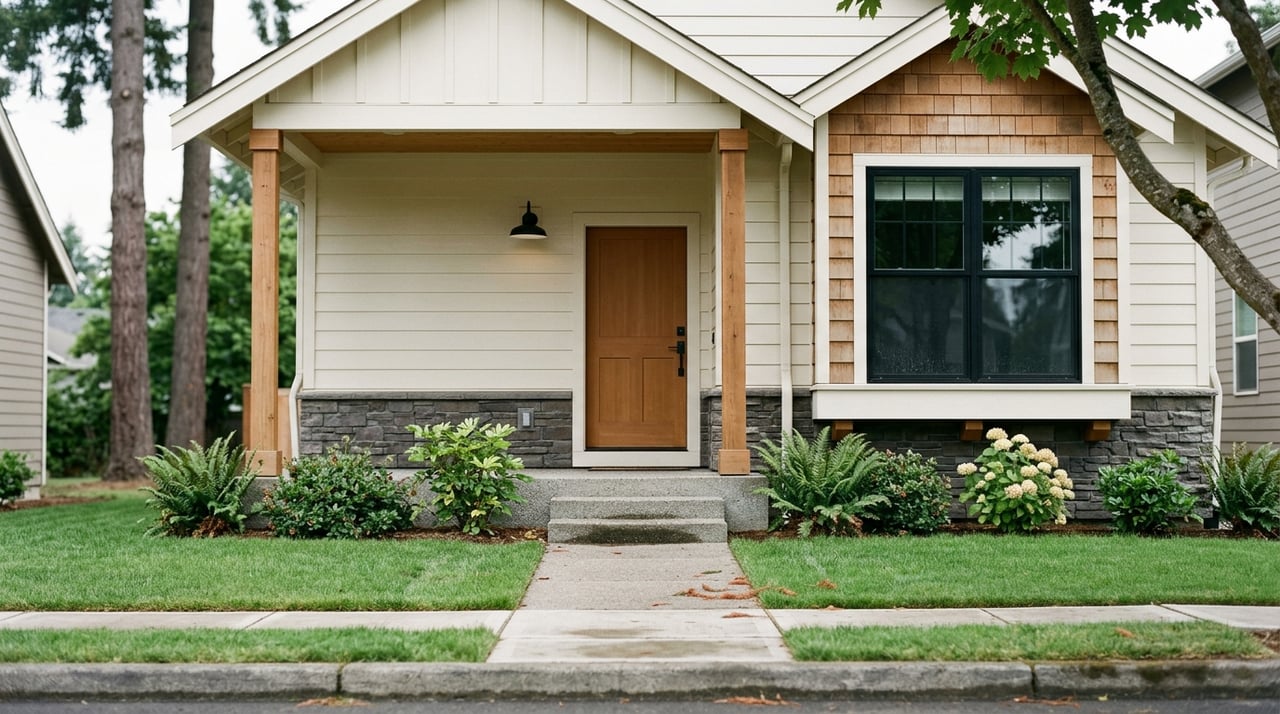
Thinking about a move to Camas and wondering whether it will feel like the right fit day to day? That is a smart question, because Camas offers a mix that can be hard to find in one place: a small-city atmosphere, strong outdoor access, and easy connections to the larger Portland-Vancouver area. If you want a clear picture of what living in Camas, WA is actually like, this guide will walk you through the lifestyle, housing feel, location, and tradeoffs so you can decide with more confidence. Let’s dive in.
Camas at a Glance
Camas is a growing city in Clark County with an estimated population of 27,749 as of July 2025. Even with that growth, it still tends to feel more like a small city than a major metro center. Its history is tied to the paper mill, and that legacy still shapes part of the city’s identity.
From a housing and income standpoint, Camas stands out in the region. The median household income is $141,126, the owner-occupied rate is 78.3%, and the median owner-occupied home value is $711,700. Compared with Clark County and nearby Vancouver, Camas reads as a higher-cost market with a larger share of owner-occupied homes.
Everyday Life in Camas
One of the biggest draws of living in Camas is that daily life often feels balanced. You get access to outdoor recreation, a recognizable downtown, and regional commuting routes, but you are not in the middle of a dense urban environment. For many buyers, that combination is the point.
The average household size in Camas is 2.97, which reflects a city with a strong residential feel. Many people are drawn to the mix of suburban space, neighborhood variety, and community routines. If you want a place that feels active without feeling hectic, Camas often lands in that sweet spot.
Downtown Camas Feels Like a Real Town Center
Downtown Camas is not just a place you pass through. It functions as a social, cultural, and economic center for the city, with a focus on historic character and mixed-use activity. That gives the area a stronger sense of place than you might find in communities where commercial areas feel more spread out.
Local events help reinforce that feeling throughout the year. Recurring First Fridays, the seasonal Camas Farmers Market, Camas Days, and holiday events all add to the rhythm of community life. If you value having a downtown that feels active and usable, this is one of Camas’s strongest lifestyle features.
Outdoor Access Is a Major Part of Life
If you like parks, trails, lakes, and shoreline access, Camas has a lot to offer for its size. The city manages 16 developed parks, 12 miles of city trails, more than 1,060 acres of parks and open space, and three indoor recreation and community facilities. The broader Camas area also has about 60 miles of trails.
That outdoor network is one of the clearest reasons people choose Camas. Popular features include the Heritage Trail along Lacamas Lake, trails in Lacamas Park and Lacamas Creek Park, and the Heritage Park trailhead and boat launch. In practical terms, you have many options for walking, exploring, and spending time near the water.
Water access in Camas is centered on lakes and rivers rather than the coast. The city’s shoreline areas include Lacamas Creek, Fallen Leaf Lake, Lacamas Lake, Round Lake, and portions of the Columbia and Washougal rivers. That gives the city a strong Pacific Northwest feel, especially for buyers who want nature woven into everyday life.
Camas Has Distinct Neighborhood Patterns
Camas is not one uniform neighborhood. The city’s planning documents describe downtown as the traditional center and oldest, most developed part of town. That means if you want to be closer to the historic core, you will find a different setting than you would in newer parts of the city.
Prune Hill is described as primarily single-family residential, while areas north and west of downtown are more sparsely developed and may be suited to infill or redevelopment. Growth is also continuing in newer areas, including the Green Mountain Urban Village. Altogether, that points to a city with a mix of established areas, hillside neighborhoods, and newer subdivisions.
For you as a buyer, that means it helps to think beyond just price. The part of Camas you choose may shape how close you are to downtown, trails, commuting routes, and newer versus older housing stock. A neighborhood-by-neighborhood approach matters here.
Commute and Regional Access
Camas works well for people who want access to more than one job or lifestyle center. The city is about 20 miles east of Portland and about 15 miles from Vancouver. It is connected by SR-14, with links to I-5, I-205, and I-84.
The Census reports a mean travel time to work of 24.6 minutes, which supports the idea that Camas functions as part of a larger regional commute pattern. For some households, that flexibility is a major advantage. You can live in a city with a smaller-scale feel while still staying connected to the broader metro area.
Housing Costs Are the Main Tradeoff
The biggest tradeoff in Camas is affordability. The city offers a strong lifestyle package, but that comes with housing costs that are well above Clark County and Vancouver overall. For many buyers, Camas is a choice to prioritize location, amenities, and atmosphere over a lower entry price.
Here is a simple look at how Camas compares:
| Area | Median Household Income | Median Home Value |
|---|---|---|
| Camas | $141,126 | $711,700 |
| Clark County | $97,536 | $522,900 |
| Vancouver | $81,338 | $462,400 |
If you are comparing communities in Southwest Washington, these numbers help explain why Camas often feels more competitive. You may be paying for access to trails, lakes, a well-used downtown, and a city that has a strong owner-occupied housing base.
What Camas May Feel Like for Different Buyers
If you are relocating from Portland or Vancouver, Camas may feel quieter, more residential, and more centered around outdoor recreation and community events. You still get regional access, but your day-to-day surroundings may feel more relaxed. That can be appealing if you want a change of pace without giving up convenience.
If you are moving up into a larger home or different lifestyle, Camas may stand out for its mix of newer neighborhoods and established areas. You can often narrow your search based on whether you want proximity to downtown, access to trail systems, or a more recently developed setting. That kind of variety gives buyers more than one path into the market.
If you are focused on household infrastructure, the Camas School District includes six elementary schools, three middle schools, and three high schools, including Camas High School, Discovery High School, and Hayes Freedom High School. For many households, that is an important part of understanding how the city is organized. It helps give context to how services and daily routines may be structured across the area.
Is Camas the Right Fit for You?
Camas tends to be a strong fit if you want a small-city environment with meaningful outdoor access and a true town center. It also makes sense if you need regional connectivity to Portland, Vancouver, or other nearby job centers. The overall appeal is not just one feature, but how those features work together.
At the same time, budget matters. Camas offers a lot, but it asks more financially than many nearby options. If you are considering a move, the key is weighing whether the lifestyle, location, and housing environment line up with what matters most to you.
If you want help sorting through Camas neighborhoods, comparing it with nearby communities, or building a smart plan for your move, Daniel Treacy can help you navigate the process with clear guidance and local insight.
FAQs
What is the overall lifestyle like in Camas, WA?
- Camas offers a small-city feel with a historic downtown, strong parks and trails access, lake-and-river recreation, and convenient regional connections to Vancouver and Portland.
Is Camas, WA an expensive place to live?
- Camas has higher housing costs than both Clark County and Vancouver, with a median owner-occupied home value of $711,700 compared with $522,900 in Clark County and $462,400 in Vancouver.
What makes downtown Camas stand out?
- Downtown Camas serves as a social, cultural, and economic center, with recurring events like First Fridays, the Camas Farmers Market, Camas Days, and holiday celebrations.
What kind of outdoor recreation is available in Camas, WA?
- Camas has 16 developed parks, 12 miles of city trails, more than 1,060 acres of parks and open space, and access to lakes, creeks, shoreline areas, and boat launch points.
Is Camas, WA good for commuters?
- Camas is connected by SR-14 and has access to I-5, I-205, and I-84, with the city located about 20 miles from Portland and 15 miles from Vancouver.
What types of neighborhoods are found in Camas?
- Camas includes the historic downtown core, primarily single-family residential areas like Prune Hill, more sparsely developed areas north and west of downtown, and newer growth areas such as Green Mountain Urban Village.